How to Install CentOS 8 Desktop & the New Features of CentOS 8
CentOS is a free Linux distribution fully compatible with Red Hat Enterprise Linux. CentOS 8 came with new functionality and features that might be interesting for you.
New Features of CentOS 8
CentOS 8 has several new additions. The most important of them are:
- Cockpit, the web console for server management, is available by default;
- YUM is now based on DNF (fully compatible with CentOS 7 YUM);
- RPM 4.14 checks the entire package before installing it;
- All CentOS 8 content is available through the BaseOS and AppStream repositories;
- Support for up to 4 PB of physical memory;
- Wayland is used instead of the Xorg server by default;
- XFS supports shared copy-on-write data extents (reflinks);
- nftables replaces iptables as the default firewall backend;
- The default Python version is Python 3.6;
- PHP 7.2 is included;
- Nginx 1.14 is included.
Now let us look at installing CentOS 8 with a desktop. Before you start, check that your system meets the requirements:
- at least 8 GB of disk space and 2 GB of RAM;
- a working internet connection.
Step 1
Download CentOS 8 from the official website. You can choose one of these images:
- CentOS 8 Linux ISO;
- CentOS 8 Stream ISO.
Step 2
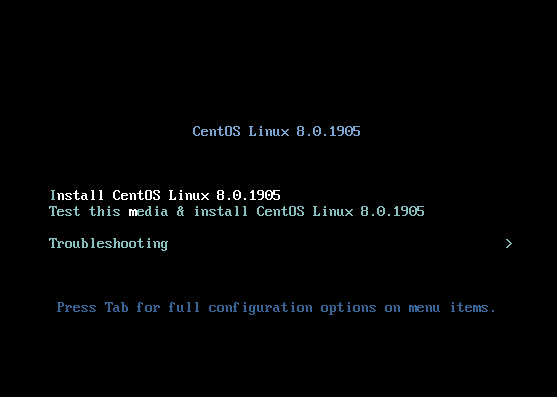
Write the image to a USB drive or DVD and boot the computer from it. If needed, change the boot order to USB or DVD in the BIOS settings. When the system boots, you will see this screen:
Step 3
Choose Install CentOS Linux 8.0:

Press Enter. The following screen will appear:

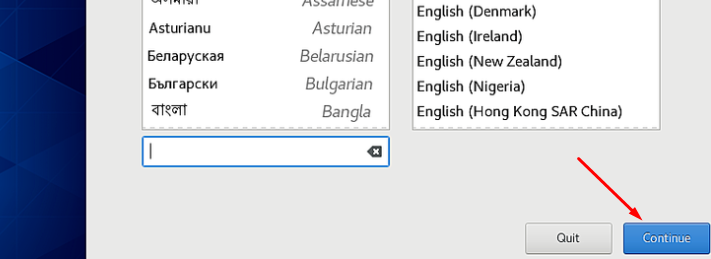
Choose the installation language and click Continue:
Step 4
The Installation Summary screen appears:
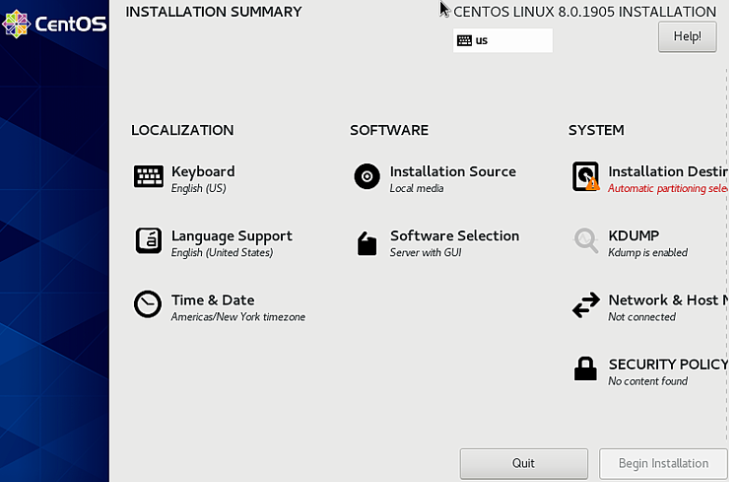
Here you can configure all the options:
- keyboard;
- software selection;
- time and date, and other settings.
Click Installation Destination:
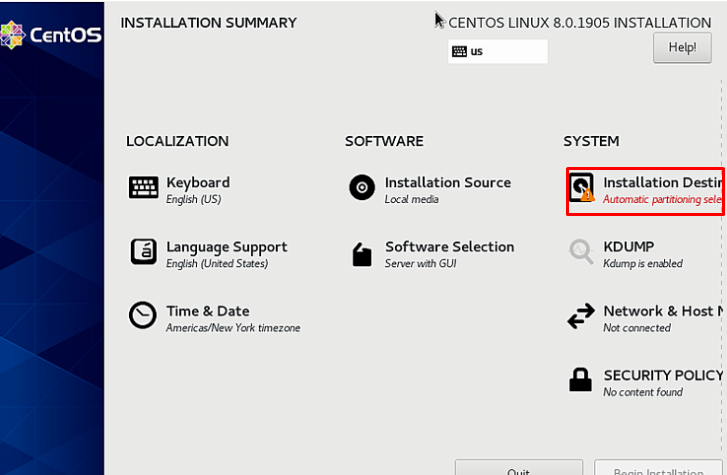
On the next screen, select the Automatic option:

Click Done:
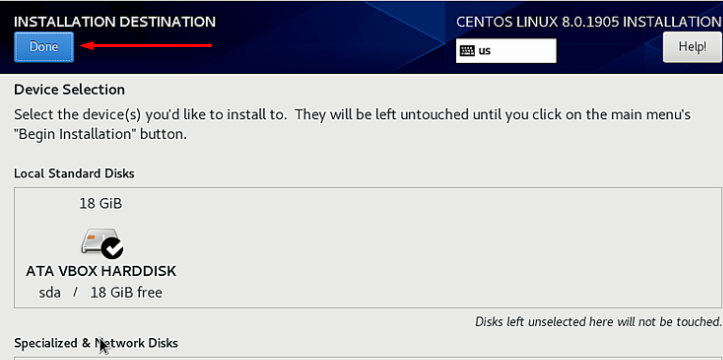
Step 5
Now you can start the installation. Click Begin Installation:
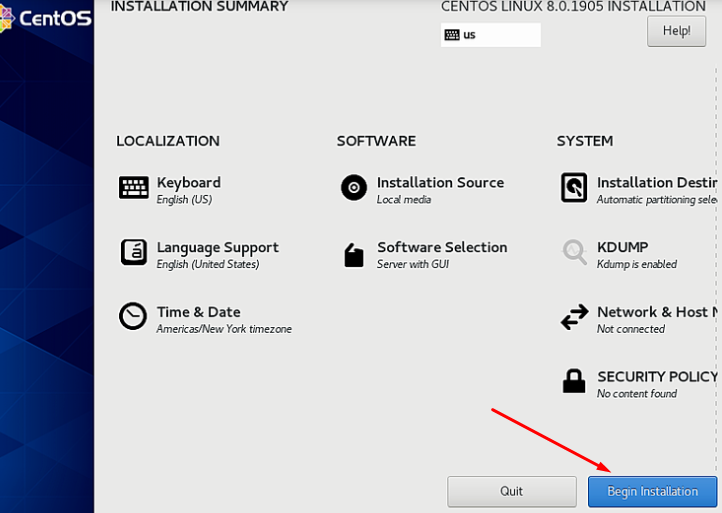
Step 6
Set up a root password in the provided field:
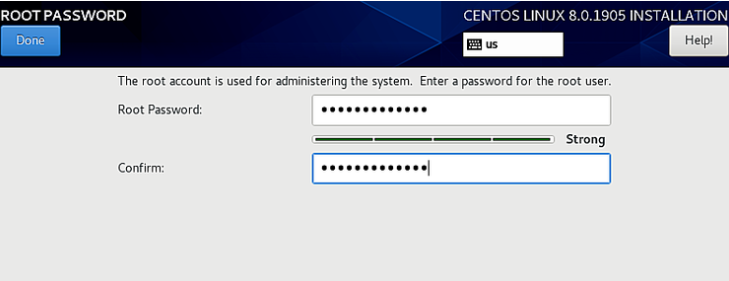
Step 7
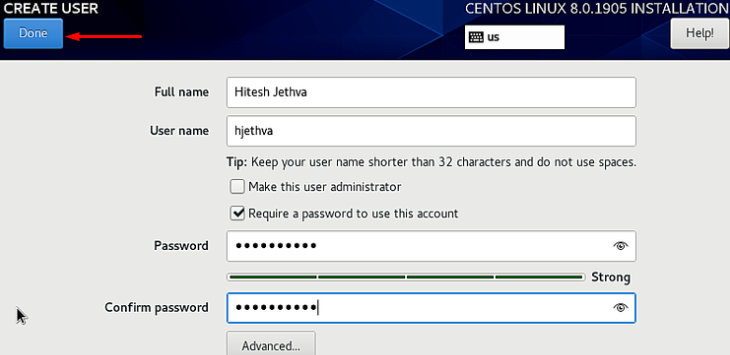
Create your user. Click Create User:
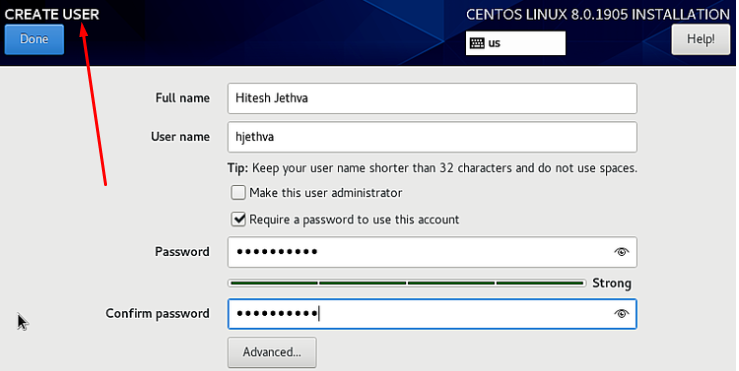
Enter your full name, user name and password, then click Done:
Step 8
When the installation is complete, the following screen appears:
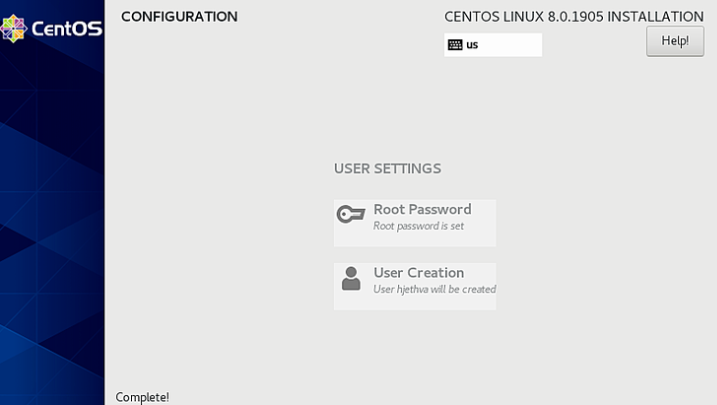
Click Reboot to restart the system and boot it from the hard disk.
Step 9

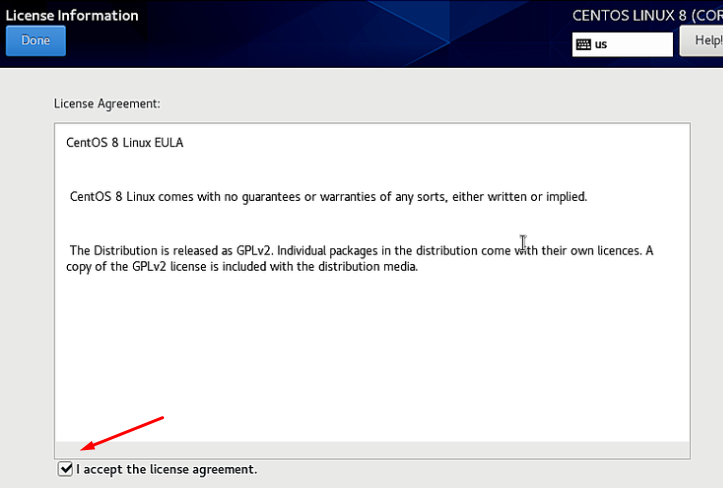
After the reboot, you will see the initial setup screen. Click License Information and accept the license agreement:

Click Done:
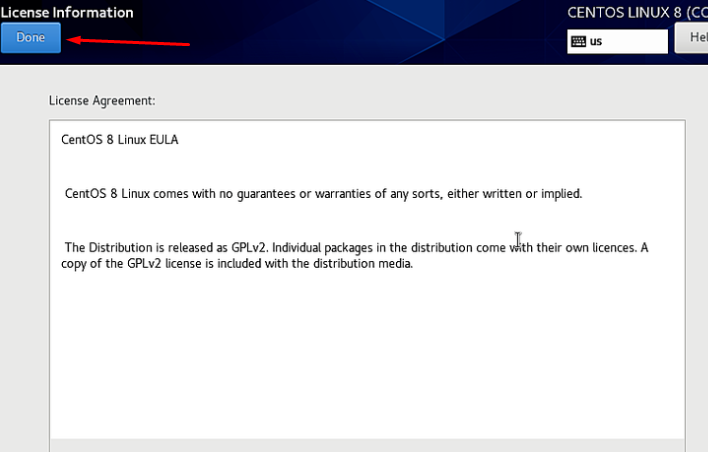
You will see this screen:
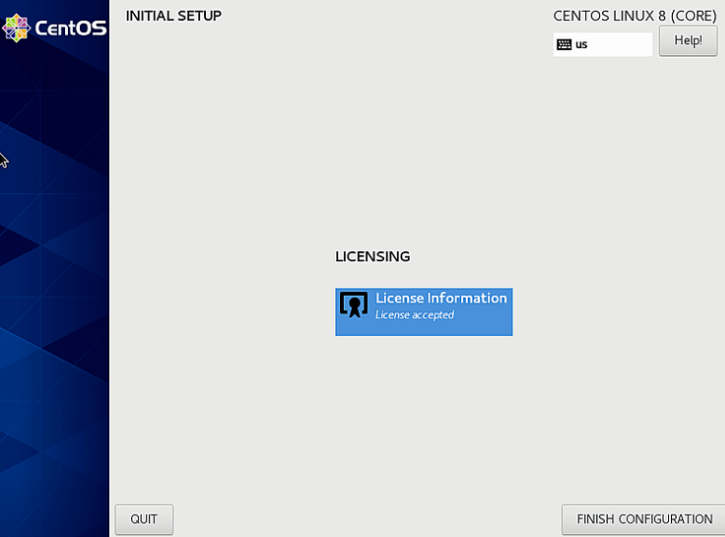
Click Finish Configuration:

Step 10
The system opens the CentOS 8 login page. Enter your login data and sign in. You will see the Welcome screen:
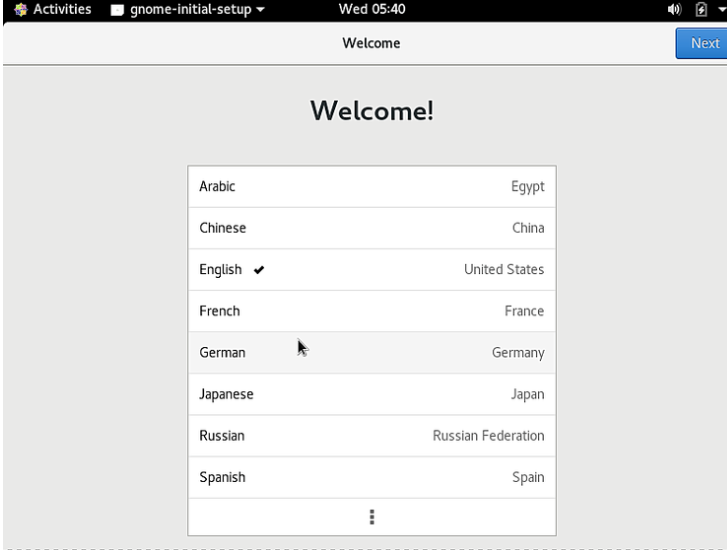
Choose your language and keyboard layout, then click Next:
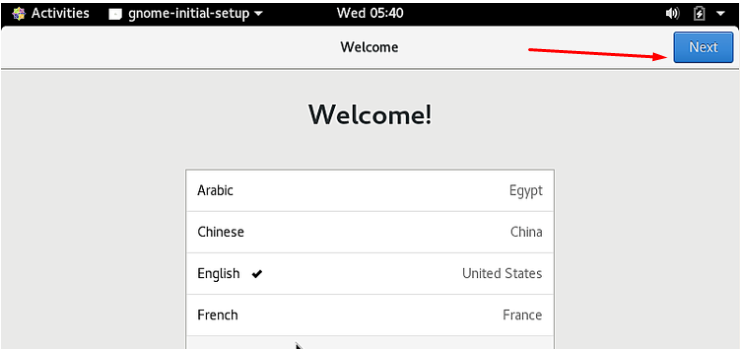
Step 11
Next, choose whether to turn on location services and click Next:

When the following screen appears, click Skip:
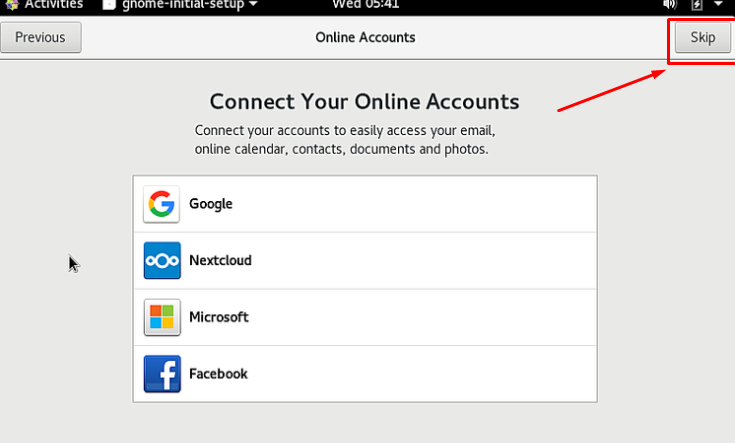
On the next screen, click Start Using CentOS Linux:
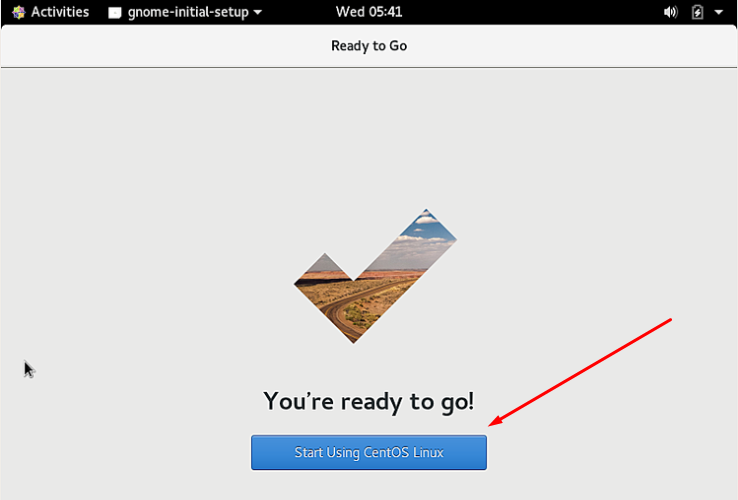
The CentOS 8 desktop will appear:

That's it, you can use your CentOS 8 desktop.
Blog